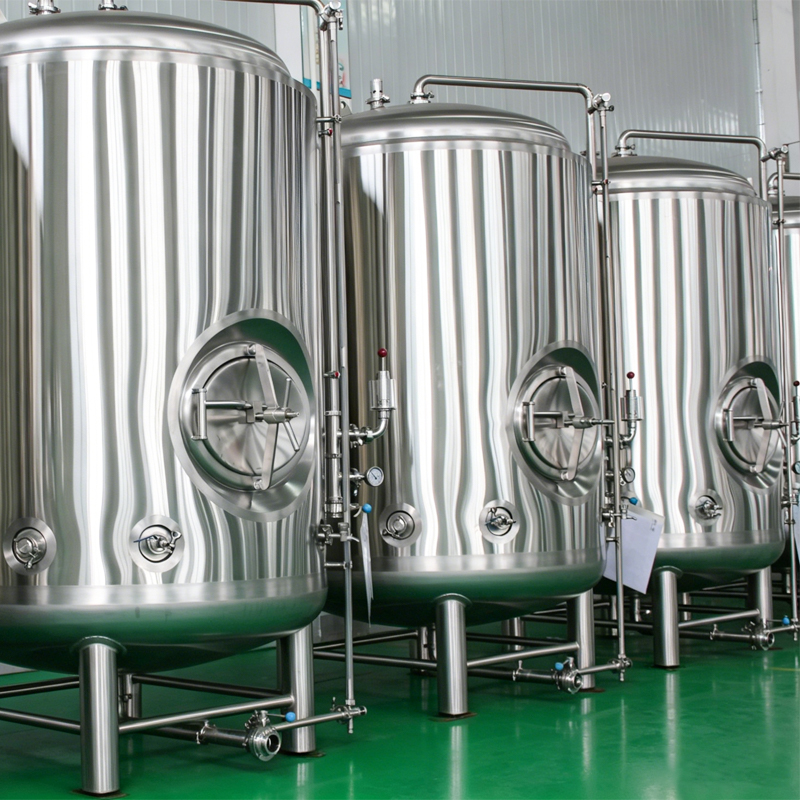
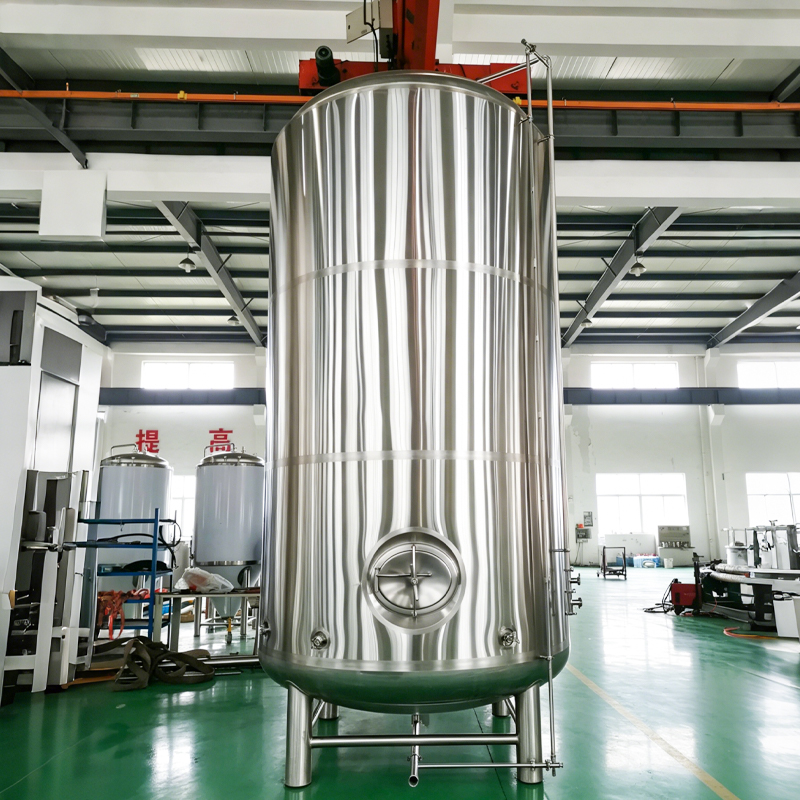
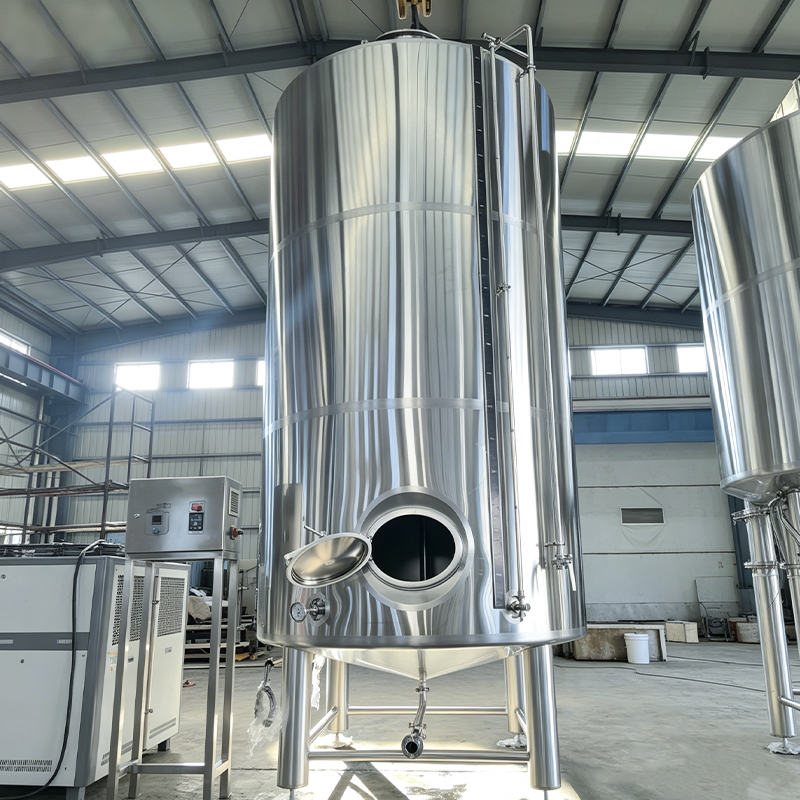
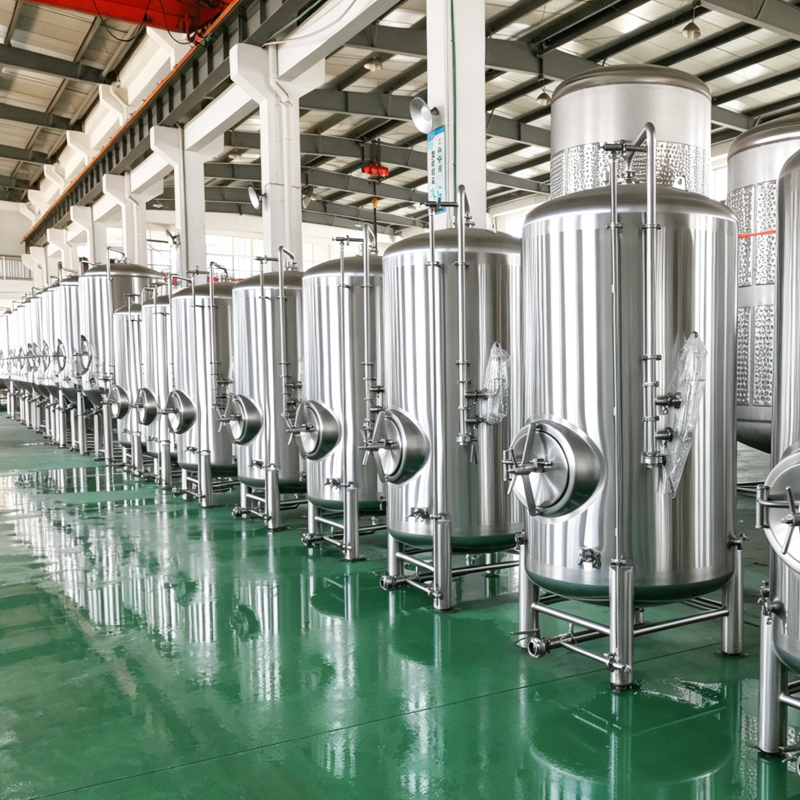
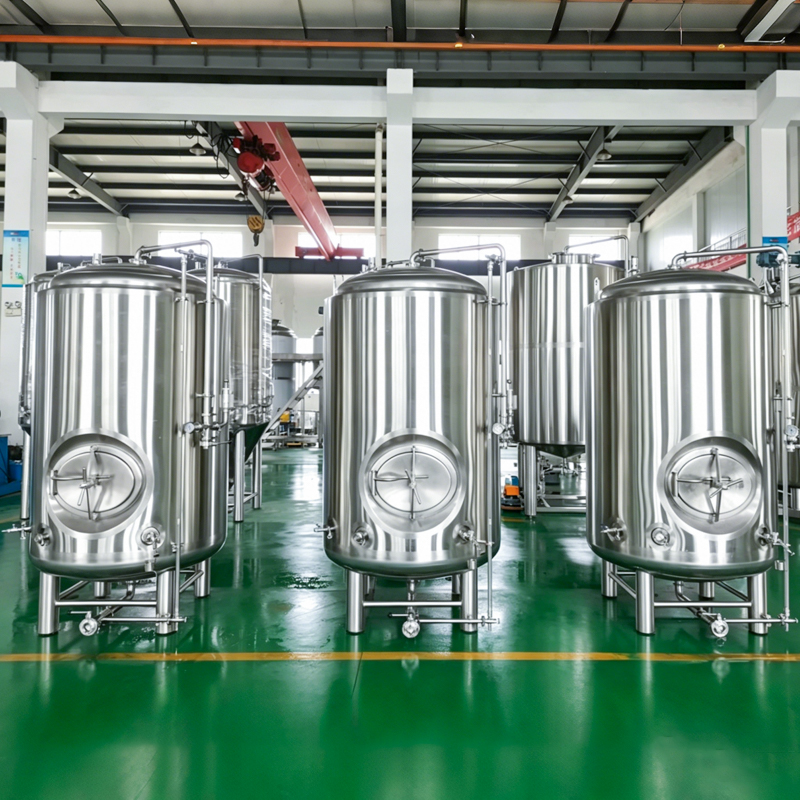
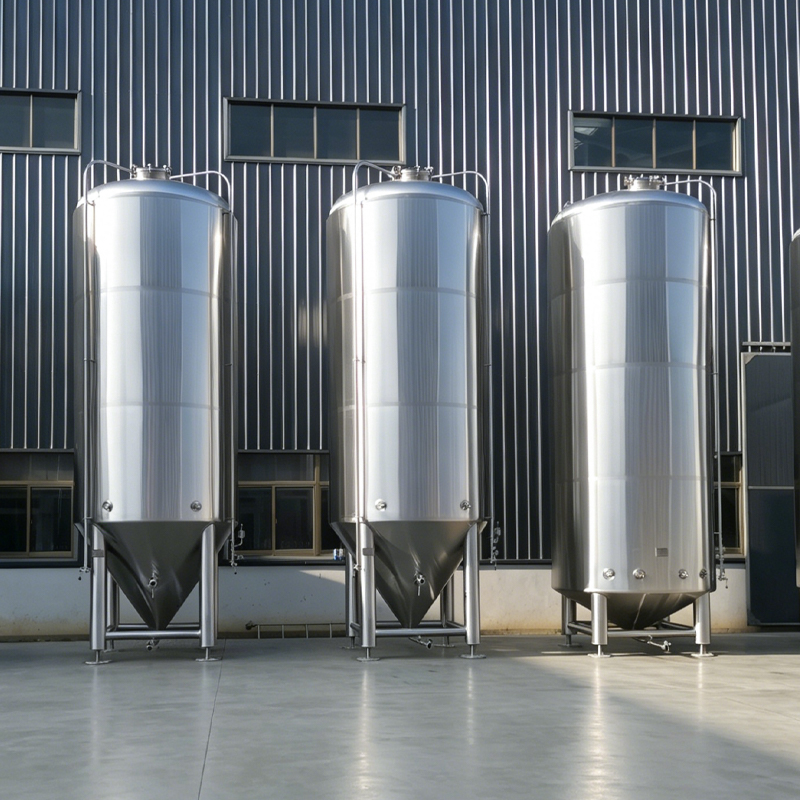
What Are Stainless Steel Aseptic Storage Tanks?
Stainless Steel Aseptic Storage Tanks are sealed, sterilizable vessels used to hold sterile liquid products between thermal processing and final packaging without introducing microbial contamination. Built from 304 or 316L food-grade stainless steel, these tanks maintain a sterile internal environment through sterile air overlay, steam barriers, and CIP/SIP-compatible construction, making them a core component of UHT dairy, juice, and beverage lines.
Inom denna kategori, Aseptic Buffer Storage Tanks serve a more specific role: they sit between the sterilizer and the filling machine to absorb differences in throughput, so the sterilization unit and the filler can each run at their own optimal speed without stopping the line for minor interruptions.
Key Advantages of Aseptic Buffer Storage Tanks
Att lägga till en bufferttank till en aseptisk linje ger mätbara driftsfördelar, särskilt vid produktionsscheman med stora volymer.
- Continuous line operation — påfyllnings- eller UHT-enheten kan pausa kort för byten utan att stoppa hela processen
- Minskad produktförlust under korta nedströmsstopp, eftersom steril produkt hålls säkert istället för att dumpas
- Stabil produkttemperatur och tryckkontroll genom mantlade, isolerade tankväggar
- Kompatibilitet med automatiserade CIP (Clean-in-Place) och SIP (Sterilize-in-Place) cykler för repeterbara hygienstandarder
- Spegelpolerade invändiga ytor (vanligen Ra ≤0,8μm) som minimerar produktrester och bakteriell vidhäftning
How Aseptic Buffer Storage Tanks Work
Tanken fungerar som en steril förvaringskammare placerad efter UHT-sterilisatorn (Ultra-High Temperature) och före det aseptiska fyllmedlet. Sterile product enters through a double-seat or mix-proof valve that prevents any contact between the sterile and non-sterile sides of the system.
Inne i tanken, steril tryckluft eller kväveöverdrag bibehåller ett lätt övertryck, vilket hindrar luftburna föroreningar från att komma in även om tanken bara är delvis full. A steam barrier surrounds all product-contact openings, continuously sterilizing any surface that could otherwise become an entry point for bacteria. Level sensors and PLC-based automation coordinate the tank's fill and discharge rates with the upstream sterilizer and downstream filler, keeping the whole line synchronized.
Strukturella kärnkomponenter
A typical thermal aseptic buffer tank includes a vertical dome-top vessel, a valve manifold for product and CIP fluid routing, sterile air/gas connections, a jacketed shell for temperature control, and an agitator for products requiring homogenization or particulate suspension.
Typical Applications and Industry Use Cases
Aseptic buffer storage tanks are widely used across dairy (milk, yogurt drinks), juice and beverage processing, liquid egg products, and sauces or purees with small particulates. They are especially valuable in plants running multiple filling formats from a single sterilization line, where filler changeovers would otherwise interrupt sterile production.
Som en Kina-baserad OEM/ODM-tillverkare av vätskeprocess- och bryggeriutrustning med over 20 years of industry experience , YME Equipment Co., Ltd designs and supplies aseptiska lagringstankar i rostfritt stål and aseptic buffer storage tanks as part of complete brewhouse, fermentation, and CIP system solutions. YME's engineering and production teams undergo continuous technical training to keep pace with evolving hygienic design standards, and the company's stainless steel equipment has been exported to customers across Europe, North America, Australia, and Asia, supported by long-term technical partnerships built on consistent product quality.
Choosing the Right Tank Capacity and Design
Att välja en bufferttank av lämplig storlek beror på fyllmedlets stilleståndstolerans och sterilisatorns kontinuerliga utmatningshastighet. Tabellen nedan visar generella kapacitetsintervall som vanligtvis ses i branschen som referens.
Allmänna kapacitetsreferensintervall för aseptiska buffertlagringstankar | Produktionsskala | Typisk tankvolym | Vanlig applikation |
| Pilot / liten batch | 50L – 600L | R&D and pilot-scale trials |
| Mellanskalig produktion | 6 000 L – 15 000 L | Mejeri- och juicelinjer |
| Storskalig produktion | 20 000 L – 40 000 L | Dryckesanläggningar med hög volym |
Källa: allmänna industrikapacitetsintervall sammanställda från publicerade utrustningsspecifikationer inom den aseptiska bearbetningssektorn.
Vanliga frågor
F1: Hur länge kan produkten säkert stanna i en aseptisk buffertlagringstank?
Holding time depends on the product and tank design, but well-engineered aseptic buffer tanks are built to maintain sterility for extended holding periods, often spanning a full production shift, without compromising product safety.
Q2: What material grade is used for stainless steel aseptic storage tanks ?
Most product-contact surfaces use 316L stainless steel for its corrosion resistance and hygienic finish, while non-product-contact structural parts may use 304 stainless steel to balance performance and cost.
F3: Kan aseptiska buffertlagringstankar integreras med befintliga CIP-system?
Ja. These tanks are typically designed with standardized CIP/SIP connection points so they can be incorporated into an existing cleaning loop or a dedicated single-tank CIP unit without major line modifications.
Q4: Do aseptic buffer tanks require an agitator?
En omrörare är endast nödvändig för produkter med partiklar eller de som är benägna att sedimentera, såsom juice med fruktkött eller yoghurtbaserade drycker; smidiga flytande produkter som vanlig UHT-mjölk fungerar ofta effektivt utan en.